Prospective clinical validation completed

See the world
your way.

AI-powered color vision assessment that combines clinical screening with functional hue discrimination to generate personalized Color Perception Summaries for education, accessibility, and occupational screening.
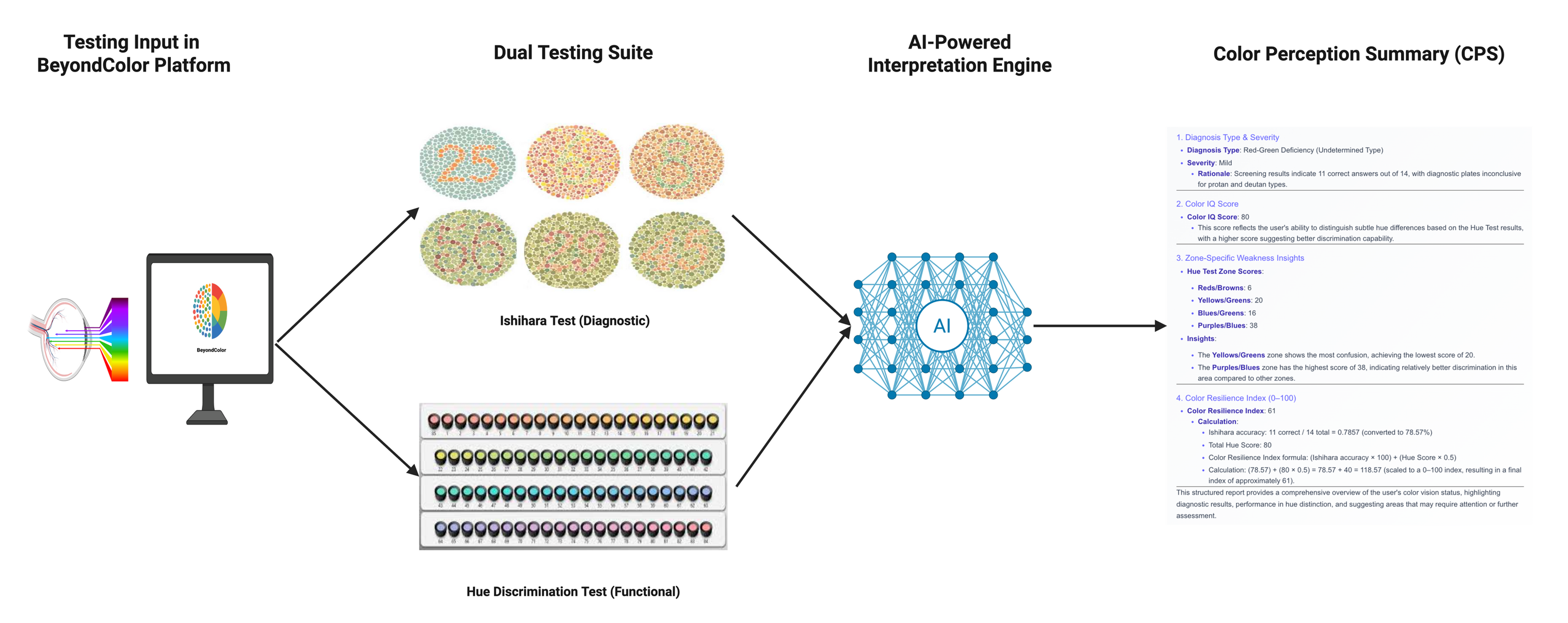
BeyondColor Platform
60+
Participants enrolled in prospective UAE clinical validation study
AUC 1.0
Functional hue discrimination model performance for occupational prediction
85%
Of ophthalmologists report Ishihara alone does not meet diagnostic needs
350M+
People globally affected by color vision deficiency

The BeyondColor Platform

A complete picture
of color perception.

BeyondColor combines diagnostic screening, functional hue discrimination, and AI interpretation to generate multidimensional color perception profiles for clinicians, schools, occupational health programs, and digital accessibility systems.
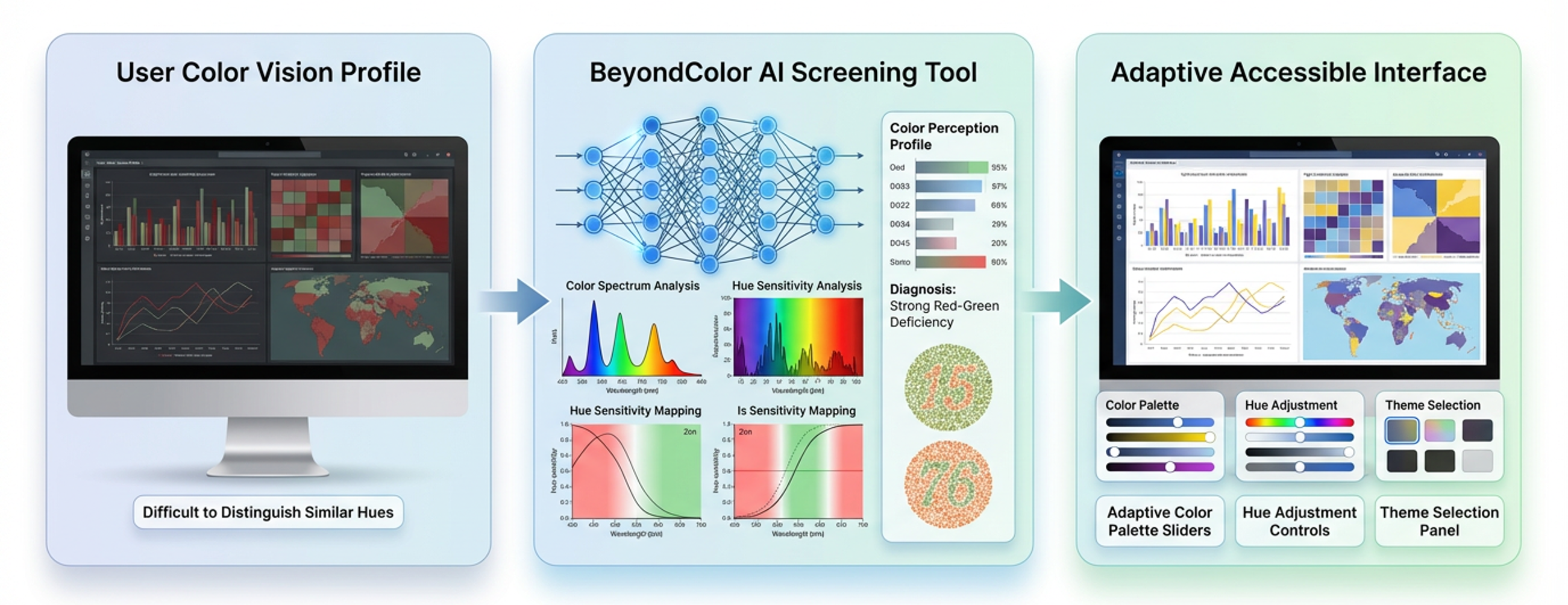
Accessibility Engine
Combines Ishihara screening with functional hue discrimination analysis
Detects acquired deficiencies traditional screening often misses
Generates personalized Color Perception Summaries (CPS)
Produces adaptive accessibility recommendations for digital interfaces
Designed for education, healthcare, occupational screening, and EdTech platforms

Prospective Clinical Validation

Evaluating real-world
color functionality.

BeyondColor was evaluated in a hospital-based prospective study comparing traditional Ishihara screening against functional hue discrimination and occupational performance tasks.
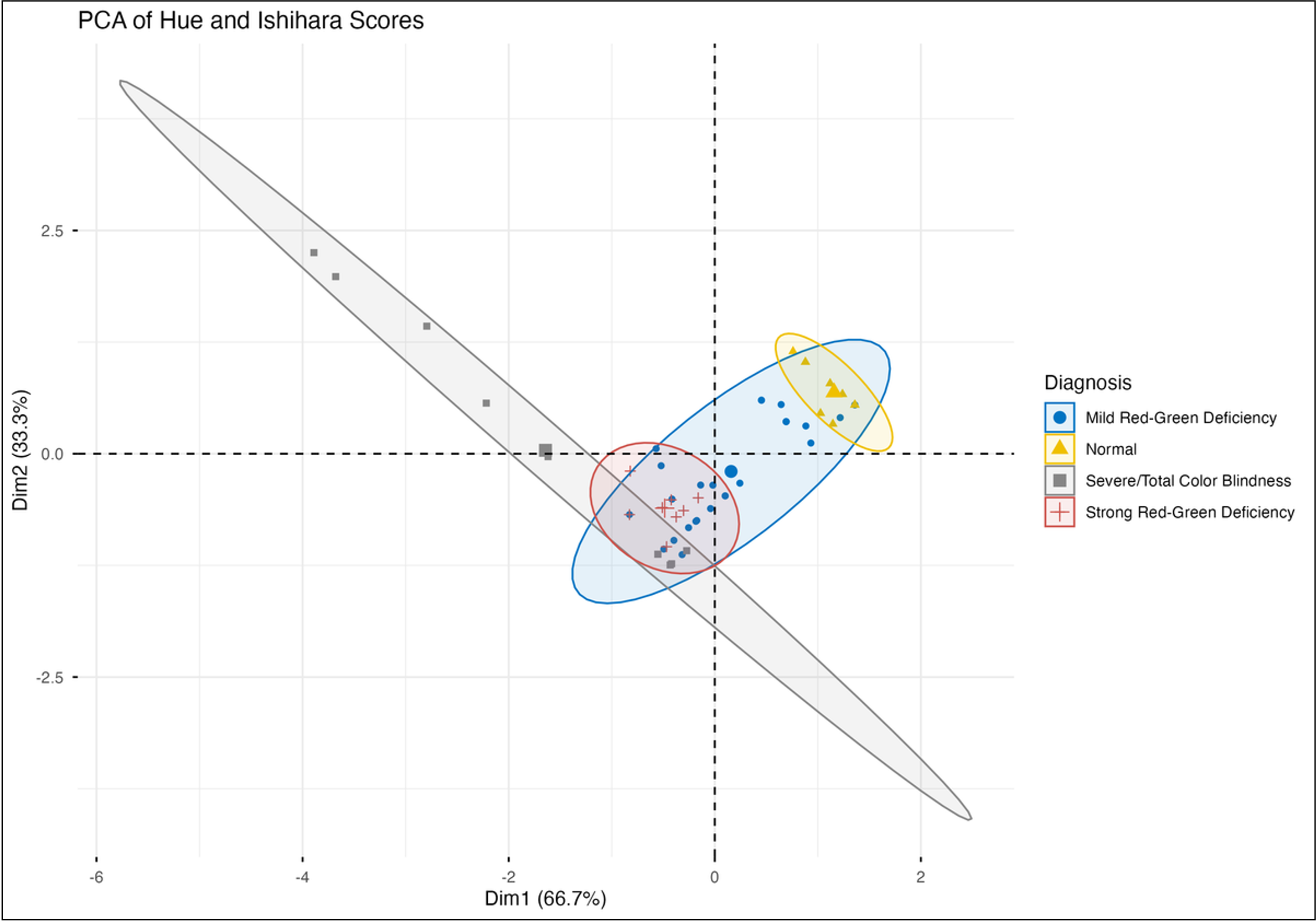
Clinical Validation
60+ participants across multiple age groups and occupational backgrounds
Included electricians, drivers, and blue-collar professionals
Observed mismatch between Ishihara classification and real-world functional ability
Detected acquired deficiencies missed by traditional screening
Functional hue testing outperformed Ishihara in occupational prediction

Why Current Screening Fails

The Ishihara test was built for a different era.

Created in 1917, Ishihara remains the global standard despite major limitations in functional assessment, accessibility adaptation, and occupational evaluation.
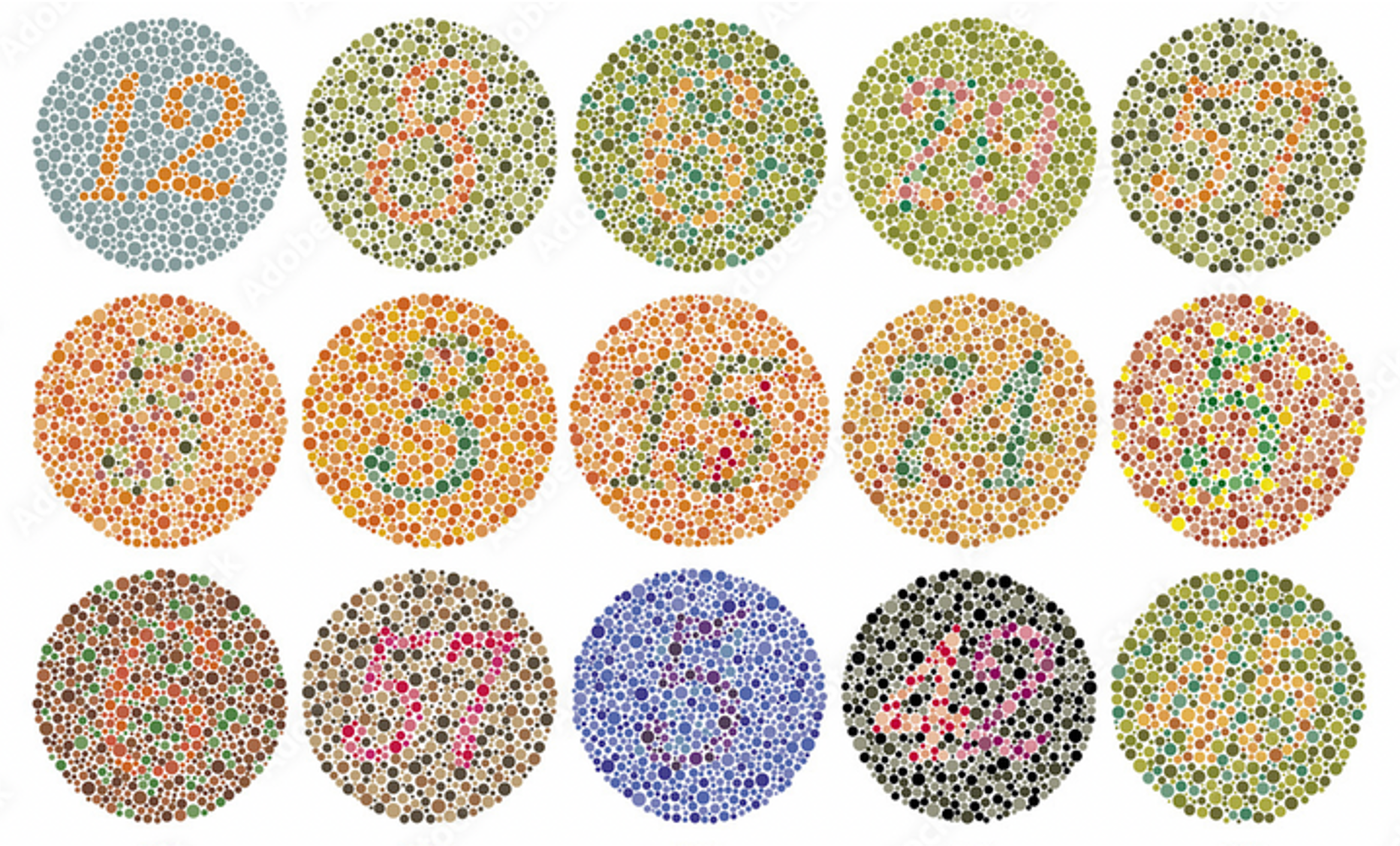
Binary pass/fail classification with limited functional insight
Cannot detect many acquired deficiencies
No severity grading or contextual interpretation
Limited relevance to real-world occupational performance
Misses blue-yellow deficiencies entirely
No personalized accessibility recommendations
Ishihara Test Limitations

Research & Recognition

Clinical Validation
60+ participant prospective hospital study evaluating functional color perception and occupational performance
Innovation Ecosystem
Developed through University of Chicago Medicine and the Innovate2Market Program at the Polsky Center for Entrepreneurship and Innovation
NSF Recognition
Selected for the National Science Foundation (NSF) I-Corps Regional Program through SPIE Photonics West
AI Ecosystem
Presented BeyondColor at Microsoft Chicago through Butter x The AI Collective Chicago
Accessibility Vision
Developing adaptive AI-driven accessibility systems for education, healthcare, and digital learning environments

The Team

Building the future of
accessible color perception.

BeyondColor sits at the intersection of clinical diagnostics, accessibility engineering, AI systems, education technology, and occupational screening.

RA
Rahil Abbu
Founder
Research Analyst at the University of Chicago Medicine focused on translational diagnostics, clinical AI, and accessibility-driven healthcare systems.
MS
Manavi Sharma
Co-Founder
MSc Computer Science student at the University of Kansas leading platform engineering, AI systems integration, and accessibility infrastructure.

Education · Healthcare · Accessibility

Ready to pilot BeyondColor?

We’re actively partnering with schools, healthcare systems, occupational health programs, and digital accessibility platforms.

Request a demo